

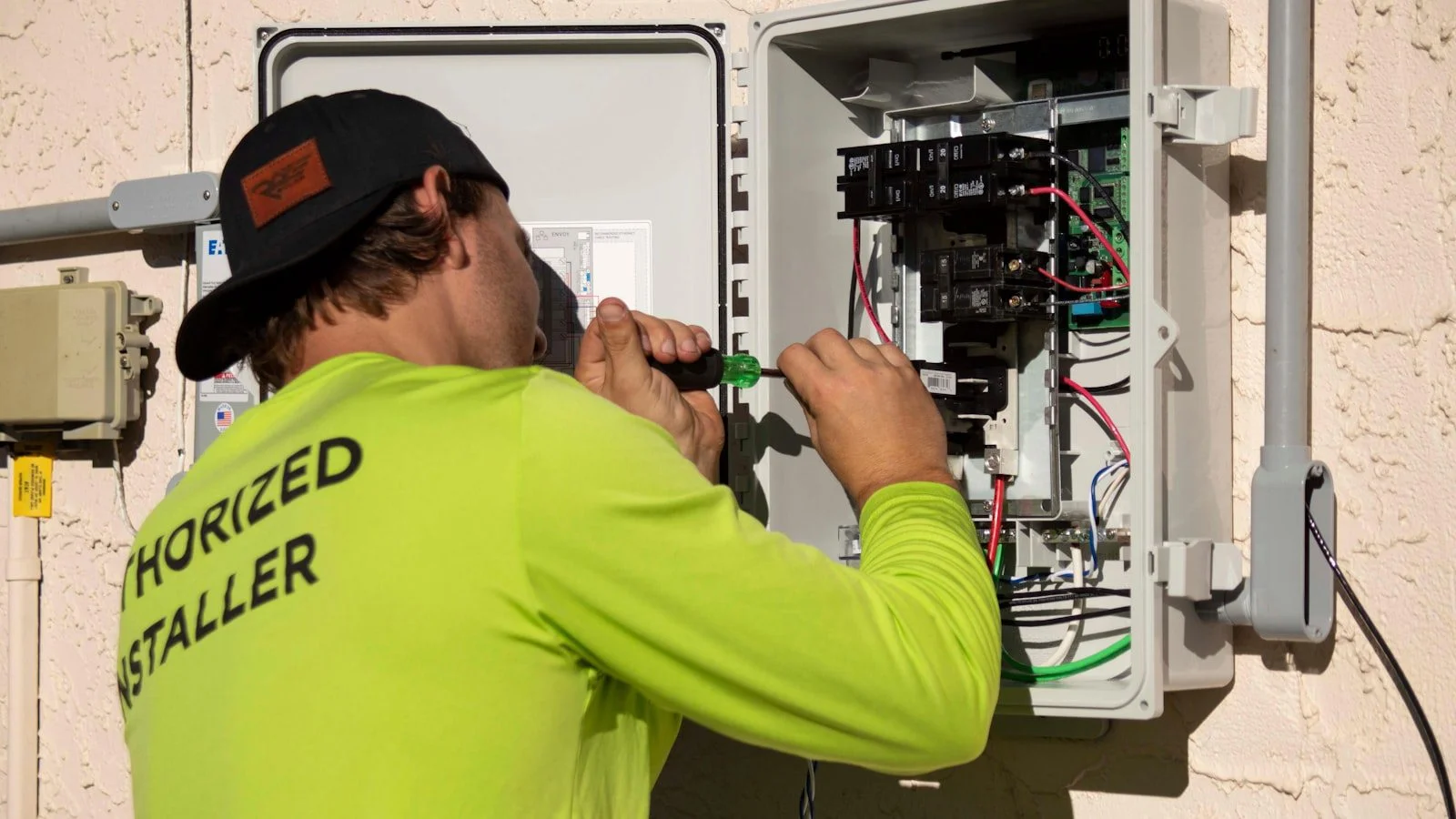
Why SEO is the cheapest marketing channel for electricians
Electrical work is one of the highest-value local search categories. People searching “electrician near me” or “rewire quote Chichester” aren’t browsing. They’re ready to book. The job goes to whichever business they call first that feels qualified, available and trustworthy.
The cost of competing for those searches is surprisingly low if you know what you’re doing. Most electrical businesses either ignore SEO entirely or get sold expensive packages from agencies that don’t understand the trade. That leaves a real gap for any electrician willing to spend a few hours a month on the basics.
Win the map pack, win the work
For local searches, Google shows a “map pack” of three businesses above the regular results. Being one of those three is the single biggest thing you can do to bring in new work. If you’re not in the map pack, most local searchers won’t see you at all.
Your Google Business Profile is the main lever here. We covered the full setup in how to set up and optimise your Google Business Profile. For electricians, the priorities are:
- Pick the right primary category. “Electrician” is the obvious one. Add secondary categories like “Electrical installation service” or “Lighting contractor” if relevant.
- Set your service area accurately. Cover the towns you actually work in, not the whole country.
- Add real photos. Vans, completed work, your team, your tools. Real photos beat stock every time.
- List your services in detail. EICR testing, fuse board upgrades, EV charger installation, rewires, fault finding, lighting design. Each one is its own service entry.
- Show your qualifications. NICEIC, NAPIT, Part P. These are trust signals that matter.
Reviews are non-negotiable
Ask any local SEO expert what matters most for trades and the answer is the same: reviews. Quantity, quality, recency, and how you respond to them. The electrician with 200 reviews and a 4.9 rating wins almost every time over the one with 18 reviews, even if the second one is technically better at the work.
How to actually get them:
- Ask in person at the end of every job. “If you’ve been happy with the work, would you mind leaving us a Google review? It really helps us out.”
- Send a follow-up text or email with a direct review link.
- Reply to every review you get. Especially the negative ones. Future customers read your replies.
- Don’t fake them. Google is good at spotting it and will penalise you.
For more, see how to get more Google reviews.
The single fastest way to outrank your local competitors is to have more recent five-star reviews than they do. Everything else is supporting cast.
Build a website that earns the call
A “digital business card” website does almost nothing for SEO. To compete properly, you need a real website with structured pages, real content and clear calls to action. The bare minimum for an electrician:
- A homepage with phone number front and centre and a strong “we’re qualified, we’re available” message
- Service pages for each main type of work (EICRs, fuse board upgrades, rewires, EV chargers, lighting, fault finding)
- Location pages for each main town you cover
- A photo gallery of completed jobs
- Real reviews and case studies
- An “about” page with your team, qualifications and certifications
- A simple, fast contact form
Speed matters too. Most local searches happen on mobile, often in a hurry. A slow site loses calls. We talked about this in why website speed matters more than you think.
Service pages do the heavy lifting
If you want to rank for “EICR Bognor Regis”, you need a page that’s specifically about EICRs in Bognor Regis. Not a paragraph on your homepage. Not a tag in your main menu. A real page.
A good service page covers:
- What the service is, in plain English
- Why someone might need it
- What the process involves
- What you charge (or how to get a quote)
- Photos of similar work
- Reviews from customers who used that exact service
- Service area and how quickly you can attend
- A clear call to call or message
Build one of these for each main service. We talk about the underlying principles in local SEO for service businesses.
Trust signals matter even more for electrical work
Customers are nervous about hiring tradespeople they don’t know, and they’re even more nervous when the trade involves electricity. Reduce that nervousness directly:
- Display your NICEIC or NAPIT logo prominently
- Show your Part P registration
- Mention public liability insurance and the sum insured
- Add reviews to every service page, not just the homepage
- Show photos of your van, your team in branded uniforms, and your tools
- Be honest about pricing: ranges are fine, “competitive prices” is meaningless
Citations and directories
Citations are mentions of your business name, address and phone number on other reputable websites. They help confirm to Google that you’re a real business. For electricians, the ones worth your time:
- Google Business Profile (obviously)
- Checkatrade, TrustATrader, MyBuilder, Rated People
- Yell, FreeIndex, Thomson Local
- NICEIC’s own “find an electrician” tool if you’re registered
- Local chamber of commerce or town directory
Be consistent: same business name, same address, same phone number, everywhere. We talked about this in local citations.
What to skip
- “Guaranteed first page” packages. Anyone selling guarantees is selling you nonsense.
- Mass-produced location pages with the town name swapped in. Google spots this immediately.
- Buying followers or fake reviews. Both will eventually backfire.
- Posting on every social platform. Pick one and do it well, or skip social entirely.
For more on choosing a good agency, see how to choose the right digital agency.
A 90-day SEO plan for electricians
- Month 1. Optimise the Google Business Profile. Add 25 photos. Build service pages for the three biggest revenue services. Ask 20 happy customers for reviews.
- Month 2. Build location pages for the three towns where you do the most work. Add the rest of your service pages. Get listed on five quality directories.
- Month 3. Add a simple FAQ section addressing the questions customers ask most. Set up call tracking. Ask for ten more reviews.
That’s a realistic, low-cost plan that consistently moves a small electrical business from invisible to genuinely competitive. If you’d like a hand putting it into practice, get in touch.
Frequently asked questions
The map pack is the block of three businesses Google shows above the regular results for local searches, and your Google Business Profile is the main lever. Pick “Electrician” as your primary category, set your service area to the towns you actually cover, add real photos of vans and completed work, list services individually such as EICR testing, fuse board upgrades and EV charger installation, and show your qualifications.
There is no fixed number, because it is relative to whoever else is competing locally. An electrician with 200 reviews at 4.9 will usually beat one with 18, even where the second is technically the better tradesperson. What counts is quantity, quality, how recent they are, and how you reply to them.
Ask in person at the end of the job, while they are pleased with the work. Follow up with a text or email containing a direct review link, because most people will not go looking for it. Reply to every review you get, especially the negative ones, since future customers read your replies. Never fake them, as Google is good at spotting it.
Usually yes, because the searches are high intent. Someone typing “electrician near me” or “rewire quote Chichester” is ready to book, not browsing. Most electrical businesses either ignore SEO completely or buy expensive packages from agencies that do not understand the trade, which leaves a genuine gap for anyone willing to spend a few hours a month on the basics.
The towns you genuinely work in, not the widest area you could theoretically travel to. Setting it accurately helps Google match you to searches you can actually serve, and stops you competing for work that is not worth the drive.