

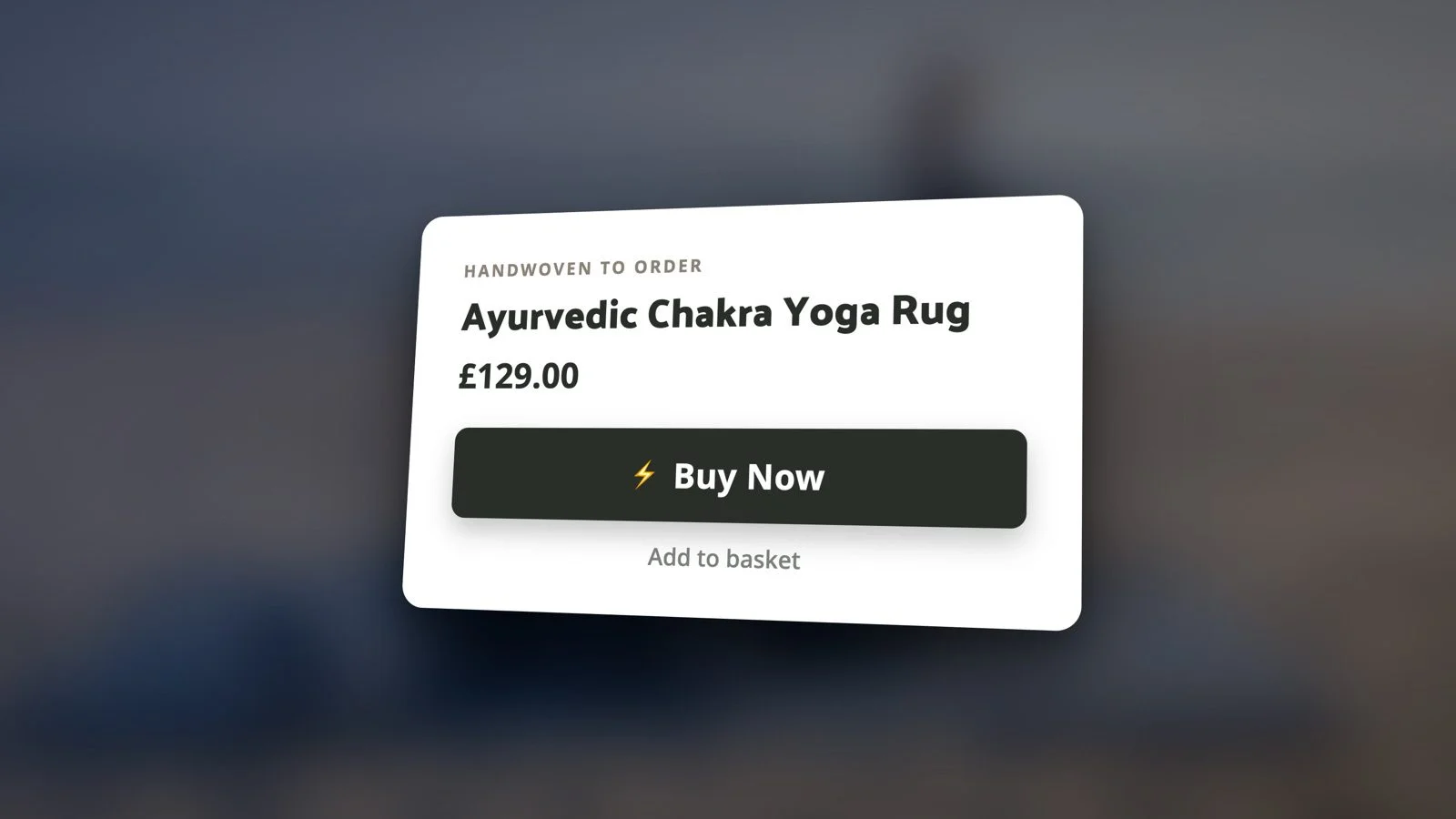
Most of what Healing Textiles sells doesn’t exist yet when you pay for it. So the usual “buy now” button was the wrong button.
Most ecommerce advice pushes you toward speed. Get the customer to checkout, fewer clicks, one big button. For a shop with shelves full of ready stock, that’s right. But the button has to match the product. Healing Textiles keeps only a little on hand, and most pieces are woven to order once someone buys them. That made-to-order nature is part of the appeal, not a snag to hide.
We designed and built the store from the ground up on Shopify, so the checkout was ours to shape around how the products actually work.
A product that gets made after you order it
Healing Textiles sells Ayurvastra yoga and meditation pieces: yoga rugs and mats, pranayama pillows, yoga blocks, meditation cushions. Ayurvastra means the cotton is organic and dyed with medicinal herbs, each colour coming from a specific plant. The cloth is handloomed and woven to order in India, by the weaving family Ellie works with.
Ellie, the founder, visited that family and built the brand around their story. So the whole thing runs on a different clock to normal retail. Only a few pieces are ever finished and waiting. Most are woven and dyed once someone commits to them, and that’s part of what makes them worth having.
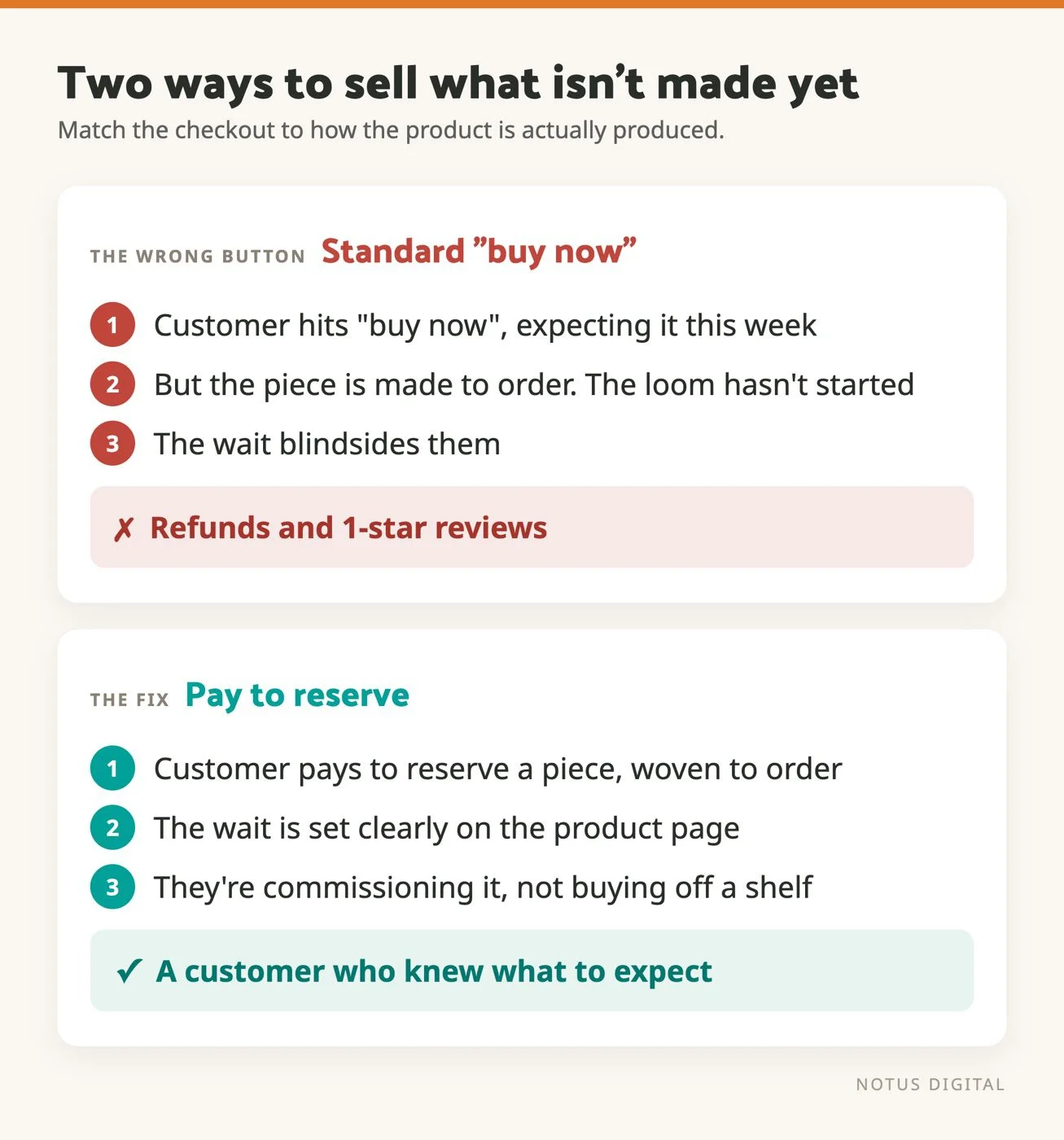
Drop a standard “buy now, ships in 2 days” flow onto that and you’ve made a problem for yourself. The customer expects a parcel by the weekend. The reality is a loom in another country and a natural dyeing process that takes as long as it takes. That gap between the promise and the truth is where refund requests and one-star reviews live.
Pay to reserve, then it gets made for you
So we skipped the usual buy-now model. We built a made-to-order flow using Shopify backorders. The customer pays upfront to reserve a piece, and it’s made for them.
Same checkout, different meaning. The money still changes hands at the start. What changes is the expectation the page sets. For a made-to-order piece, the customer isn’t buying something off a shelf, they’re commissioning it and reserving a place in the queue. That framing protects everyone. The buyer knows what the wait is for, and Ellie only promises what she can actually deliver.
It’s a conversion decision as much as a logistics one. Match the buying flow to how a piece is actually made and the page stops overselling. An honest product page converts better than a confusing one, and it earns far fewer angry emails after the sale.
The rest of the store backs up the story
A reservation model only works if the customer understands why the wait exists. If that value isn’t clear, a delay just feels like bad service. So the content had to carry its weight.
On each yoga rug, a jump-link under the colour choice drops straight to the story of the herb behind that dye. Pick a colour, read what it’s made from. We also wrote a long-form article and an FAQ explaining what Ayurvastra is and how the dyeing and handloom process works. That’s the answer to “why am I waiting, and why does this cost what it costs”.
We kept the practical side tidy too. A UK-only checkout with a clear shipping policy, international buyers pointed to enquire rather than hitting a wall at the till. Existing Judge.me reviews carried across, so the social proof was there on day one. The store went live on 14 April 2026, ready for Ellie’s launch pop-up shop in Totnes.
If your product makes people wait
If you sell something made to order, in small runs, or built around a wait that’s part of the value, take the same approach. Say the wait out loud on the product page, near the price and the buy button, not buried in a policy nobody opens. Put a number or a range on it if you can. Then give the customer a reason the wait is worth it: what’s happening during those weeks, and who’s making the thing at the other end. When the page explains the wait, the wait stops feeling like a fault.
Your buying flow is a promise. A fast “buy now” button sets an expectation your fulfilment then has to meet, and if it can’t, you pay for it in refunds and reviews. The fix usually isn’t a plugin. It’s a decision about what the button should mean, then building the checkout and the content around it to match.
We work in WordPress and Shopify, and a lot of what we do is this kind of conversion work: making the path to purchase fit the actual business behind it. If your checkout is fighting your product, that’s worth a conversation.
The made-to-order questions people ask
Ayurvastra is organic cotton dyed with medicinal herbs, each colour coming from a specific plant. The cloth is handloomed and woven to order in India.
There is no stock waiting to ship. A standard “buy now, ships in days” button sets an expectation the fulfilment cannot meet, which leads to refund requests and poor reviews. A pay-to-reserve flow matches the reality of how the product is made.
We used Shopify backorders. The customer pays upfront to reserve a piece, and it is then made for them. Same checkout, but the page sets the expectation of a wait rather than an off-the-shelf purchase.
Yes. If your product is made to order, produced in small runs, or built around a wait that adds value, the same logic applies: take payment to reserve, and set the expectation of a wait on the page. The tooling differs by platform, but the principle holds on Shopify or WooCommerce.
Say the wait out loud on the product page, near the price. Give a range where you can, and explain what is happening during those weeks and who is making the piece. When the page explains the wait, it stops feeling like a fault.